







5 min read How to Write a Great Freelance Project Brief (With Free Template)
If you have ever hired a freelancer and been disappointed with the result, there is a good chance the problem started before the work did. Not because the freelancer lacked skill — but because they did not have enough information to do the job well.
A freelance project brief is the single document that separates a smooth, successful project from one full of revisions, miscommunication, and frustration. It tells the freelancer exactly who you are, what you need, what success looks like, and what the boundaries of the project are — before a single line of code is written, a single graphic designed, or a single word published.
Businesses that write strong briefs consistently get better work, faster turnarounds, fewer revision rounds, and more accurate quotes. Those that skip the brief — or write a vague one — typically end up paying more in the long run through extra revision cycles, delays, and the occasional need to restart the project entirely.
This guide explains what a project brief is, why it matters so much, what every great brief must include, common mistakes to avoid, and a free template you can fill in and use immediately for your next hire on Worksharex.
What Is a Freelance Project Brief?
A freelance project brief is a structured document that outlines the full context, scope, requirements, and expectations of a project before work begins. Think of it as the foundation on which the entire project is built — the clearer and more complete it is, the stronger everything that follows.
A brief is not a contract (though it can inform one). It is not a terms-and-conditions document. It is a communication tool — a way of transferring everything that is currently in your head about what you need into a format that a freelancer can understand, ask questions about, and use as a reference throughout the project.
The brief serves both parties equally. For the client, it forces clarity about what is actually needed before money changes hands. For the freelancer, it provides a reference point for every decision they make and a clear benchmark against which the finished work can be judged.
Why Most Freelance Projects Go Wrong — And How a Brief Fixes It
The majority of freelance project disputes and disappointments come down to one root cause — different people had different expectations of what the project involved, and nobody discovered this until it was too late.
The client imagined a five-page website. The freelancer quoted for a three-page site. The client expected weekly progress updates. The freelancer assumed updates were only needed at completion. The client wanted unlimited revisions. The freelancer included two rounds. The client needed the logo in six file formats. The freelancer delivered one.
None of these are necessarily dishonest failures. They are expectation gaps — and every single one of them can be closed by a well-written project brief completed before work begins.
A brief also gives both parties a shared reference point if a dispute arises later. Instead of two people arguing about what was agreed verbally, both can refer to the brief and resolve the issue based on what was documented.
What Every Great Freelance Project Brief Must Include
A strong brief is not a one-size-fits-all document. A brief for a logo design project looks quite different from one for a software development project or a content writing assignment. But there are core elements that every brief — regardless of project type — should contain.
1. Business and brand overview
Start by giving the freelancer context about who you are. This should include your company name, what your business does, who your customers are, and what makes you different from your competitors. A graphic designer who understands your business values and target audience will make very different creative choices than one working with zero context.
This section does not need to be long — two to four sentences that give a clear picture of your business is sufficient. If you have a brand guidelines document, link to it or attach it here.
2. Project overview and objective
Describe the project in plain language. What are you building or creating? What problem is it solving or what goal is it achieving? What does success look like when the project is complete?
Be specific about the objective. "We need a new website" is not an objective — it is a deliverable. "We need a new website that clearly communicates our services to first-time visitors, generates consultation enquiries, and reflects our rebrand from March 2026" is an objective. The difference matters enormously.
3. Target audience
Who is the end user or intended audience for whatever is being created? For a website — who are the visitors? For a logo — who are the customers it needs to appeal to? For a content piece — who is the reader?
Include relevant details: age range, profession, location, level of technical sophistication, primary pain points, and what they care about most. The freelancer needs to understand the audience as well as you do in order to make the right creative and strategic decisions.
4. Scope of work — detailed deliverables
This is the most important section of the brief and the one most commonly written too vaguely. List every specific deliverable the project includes. Not "a website" but "a five-page WordPress website including homepage, about page, services page, blog listing page, and contact page, with a contact form, Google Maps integration, and social media links in the footer."
Not "some graphics" but "six Instagram post graphics in 1080x1080px format, three Instagram story templates in 1080x1920px format, and one Facebook cover image in 820x312px format, all in editable Canva format."
The more specific this section is, the more accurate the quote you receive — and the less likely you are to hear "that's outside the scope" mid-project.
5. Style direction and references
For any creative project — design, writing, video, photography — include visual or tonal references that give the freelancer a clear sense of the direction you want.
For design: share three to five examples of work you admire and explain specifically what appeals to you about each one. Colour palette, typography style, level of minimalism or detail, modern versus classic — all of these should be addressed here.
For writing: share examples of content that matches the tone and style you want. Is it formal and authoritative? Conversational and friendly? Data-driven and analytical? Technical or accessible?
For video: share examples of the editing style, pacing, music choices, and visual aesthetic you are aiming for.
You do not need to know the technical language. "I love how clean and minimal this looks, with lots of white space and simple sans-serif typography" is perfectly useful direction for a designer.
6. Technical requirements and specifications
Depending on the project type, this section covers the technical parameters the freelancer must work within.
For design projects: file formats required (AI, EPS, SVG, PNG, PDF, Canva), dimensions, resolution (72dpi for digital, 300dpi for print), colour mode (RGB for digital, CMYK for print), and any platform-specific requirements.
For web development: the CMS or framework to use (WordPress, Laravel, Shopify), hosting environment, third-party integrations required (payment gateways, CRM, booking systems), browser and device compatibility requirements, and any performance benchmarks.
For writing: word count range, SEO keyword targets, tone of voice guidelines, internal and external link requirements, heading structure, and the format of the final deliverable (Google Doc, Word, markdown).
For video: output resolution (1080p, 4K), aspect ratio, frame rate, final format (MP4, MOV), subtitle requirements, and platform specifications (YouTube, Instagram, LinkedIn).
7. Timeline and milestones
Give the freelancer both your final deadline and any intermediate milestone dates that matter to you. If the project involves multiple stages — such as a design project with a discovery phase, a concept presentation, a revision phase, and a final delivery phase — specify what you expect at each milestone and when.
Be honest about your timeline. If a deadline is genuinely flexible, say so. If it is fixed — a product launch date, an event, a campaign go-live — make that explicit so the freelancer can assess whether they can commit to it before accepting the project.
8. Budget range
Many clients avoid including a budget in their brief, worried it will anchor the quote too high. In practice, the opposite is true — providing a budget range helps the freelancer tailor their proposal to what is realistic, rather than proposing a scope that is either far beyond what you can afford or far beneath what you actually need.
You do not have to give an exact number. A range — "our budget for this project is between $300 and $500" — is enough to allow the freelancer to scope their proposal appropriately and tell you honestly whether what you need is achievable within it.
9. Revision policy
Specify how many rounds of revisions are included in the project. Two to three rounds is standard for most project types. Define what a revision round means — changes to the same set of deliverables based on one consolidated round of feedback, not unlimited individual tweaks spread across weeks.
Be clear about what happens if additional revisions are required beyond the agreed number — are they billed at an hourly rate, or is there a fixed cost per additional round?
10. Communication and approval process
How will you communicate during the project? Email, messaging within the platform, video calls? How frequently will you expect progress updates? What is your typical response time when the freelancer needs feedback or approval from you?
Specify your approval process — will you need to share drafts with other stakeholders before approving? If so, the freelancer should factor this into their timeline estimate.
11. Ownership and confidentiality
Confirm that all work created as part of the project is owned by you upon final payment. If the project involves access to sensitive business information, customer data, or proprietary content, note that a confidentiality agreement applies.
On reputable platforms like Worksharex, standard platform terms cover ownership and basic confidentiality — but for larger or more sensitive projects, a written NDA is worth including.
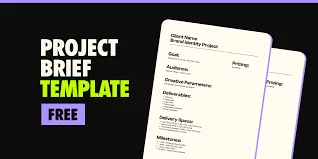
Free Freelance Project Brief Template
Copy this template and fill it in before your next project. Adapt the sections to fit your specific project type.
PROJECT BRIEF
Business name: [Your company name]
Website: [Your website URL]
Contact name: [Your name and role]
Project title: [Short descriptive title — e.g. "Homepage redesign" or "Social media content for May 2026"]
About our business: [2 to 4 sentences describing what your business does, who your customers are, and what makes you different.]
Project objective: [What are we building or creating? What specific problem does it solve or goal does it achieve? What does success look like?]
Target audience: [Who is the end user or intended audience? Include age range, profession, location, and key characteristics.]
Scope of work — deliverables: [List every deliverable included in this project. Be specific about quantity, format, size, and platform.]
- Deliverable 1:
- Deliverable 2:
- Deliverable 3: [Add as many as needed]
What is NOT included in this project: [List anything that might be assumed to be part of the project but is explicitly excluded — e.g. copywriting, photography, hosting setup, ongoing maintenance.]
Style direction: [Describe the style, tone, and aesthetic you are looking for. Include links to 3 to 5 reference examples and explain what specifically you like about each one.]
Brand guidelines: [Link to brand guidelines document, or list key details — primary colours (hex codes), fonts, logo file location, tone of voice.]
Technical requirements: [List any technical specifications — file formats, dimensions, CMS, integrations, word count, keyword targets, etc.]
Timeline:
Project start date: [date] Milestone 1 — [description]: [date] Milestone 2 — [description]: [date] Final delivery deadline: [date]
Is this deadline flexible? [Yes / No / Partially — explain]
Budget: Our budget for this project is approximately [£/$ amount or range].
Revisions: This project includes [number] rounds of revisions. Additional revisions will be discussed and agreed separately.
Communication: Preferred communication channel: [Platform messaging / Email / Video call] Expected update frequency: [Daily / Weekly / At each milestone] Approval response time: [How quickly will you respond to drafts or questions?]
Ownership and confidentiality: All work created as part of this project is owned by [your company name] upon final payment. This project involves access to confidential information and standard confidentiality terms apply.
Anything else the freelancer should know: [Any additional context, constraints, preferences, or information that does not fit neatly into the sections above.]
How to Use This Template Effectively
Fill in every section before you post your project or contact a freelancer. Even if a section feels uncertain — for example, you are not sure exactly how many revisions you will need — write your best estimate and flag it as flexible. A brief with honest estimates is far more useful than one with sections left blank.
Share the completed brief with every freelancer you are considering for the project, not just the one you end up hiring. It allows you to compare proposals on an equal basis — same scope, same requirements, same context — rather than comparing apples to oranges.
Review the brief with the freelancer before work begins. Ask them to confirm they have read it, understood it, and flagged any questions or concerns. Any gaps or ambiguities should be discussed and resolved before the first payment is made.
Finally, treat the brief as a living reference throughout the project. If requirements change mid-project — as they sometimes do — document the changes in writing as an amendment to the brief rather than managing them verbally. This protects both you and the freelancer.
Common Brief-Writing Mistakes to Avoid
Being vague about deliverables. "A website" or "some content" or "a few graphics" are not deliverables. Quantity, format, platform, and specifications must be explicit.
Leaving out the budget. Clients who refuse to share a budget range receive proposals that are either overpriced or under-scoped. Share a range — it helps everyone.
Not including reference examples. For any creative project, references are worth a thousand words of description. Always include three to five examples of work you admire.
Forgetting to specify file formats. Receiving a finished logo design in JPEG only — when you needed the vector source file — is a frustrating and avoidable outcome.
Skipping the "not included" section. Listing what is excluded from the project is just as important as listing what is included. It prevents scope creep and sets clear boundaries.
Writing the brief after the quote. The brief should come first. Getting a quote before the scope is defined means the quote will almost certainly change once the full scope is understood.
Final Thoughts
A well-written freelance project brief is one of the most valuable tools in your outsourcing toolkit. It takes 30 to 60 minutes to write properly — and it saves hours, sometimes days, of back-and-forth, revision cycles, and frustration on both sides of the project.
The businesses that consistently get the best results from freelancers are not the ones with the biggest budgets. They are the ones who communicate clearly, set expectations upfront, and treat the briefing process as an investment in the outcome.
Use the template above, fill in every section, and bring it to your next project. You will notice the difference immediately.
Ready to post your next project with a brief that gets results? Find the right freelancer on Worksharex and get started today.
Published by the Worksharex editorial team. Last updated: May 2026.